

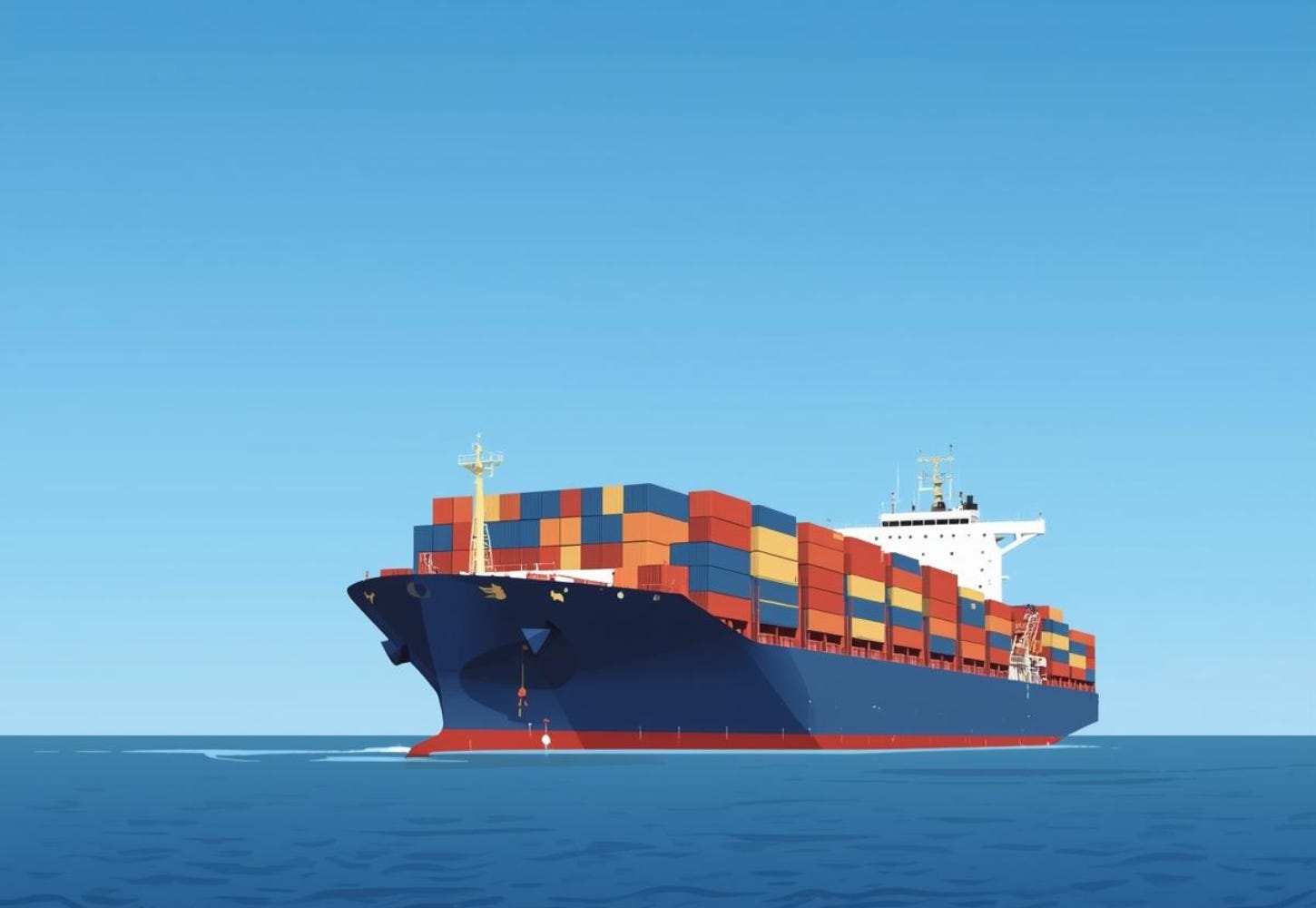
Shipping is integral to the global economy and supply chain security, with over 90% of global trade by volume moved by sea. Much of what makes shipping unique – its mobility, reach and flexibility – also makes it vulnerable to geopolitical risk and uncertainty. These include challenges introduced by the energy transition relating to supply and infrastructure, security and safety, regulatory uncertainty, and competition and contestation.
As the energy transition gains momentum, new fuels, technologies and emerging energy powers are reshaping the energy politics and risk landscape of tomorrow. This introduces both opportunity and risk, as shipping companies navigate yet another geopolitical shift on the path towards Net Zero. Governments will need to work closely with industry to stay ahead of the challenges, and to protect national interests and ensure national security.
Responsible for 3% of global greenhouse gas emissions, shipping is often described as a ‘hard-to-abate’ industry, highly dependent on energy-dense fuels. The fuel volumes required make the transition challenging, and alternatives vary in suitability. While there is no clear frontrunner in viable Net Zero fuels and no one way forward in industry, blend-in biofuels, hydrogen, methanol and ammonia have emerged as key contenders.
Despite regulatory uncertainty and setbacks, such as the postponement of a global Net Zero framework, the energy transition is gaining momentum. The most significant regulatory pressure comes from the European Union (EU), through the inclusion of shipping in the EU Emission Trading System and the FuelEU Maritime, both of which will influence global operators. On the infrastructure side, the Alternative Fuels Infrastructure Regulation (AFIR) requires EU ports to provide onshore power supply for vessels above certain thresholds.
The United Kingdom (UK) is moving towards greater alignment with these regulations, with shipping expected to be included in the Emissions Trading Scheme in 2026. While the energy transition in shipping promises environmental benefits, the industry will remain a net-negative contributor, with the aim to minimise harm through cutting emissions and improving efficiency.
The number of ships using alternative fuels is slowly increasing, but remains a small portion of the global fleet. For existing vessels, emissions reductions depend on energy efficiency measures, including retrofitting energy efficiency applications such as air lubrication systems, propellers and wind-assisted technologies. For newbuilds, many industry leaders are opting for dual-fuel or multi-use designs to future-proof their fleets. Initiatives to secure green fuels are also ongoing, with the United European Car Carriers’ (UECC) ‘Sail for Change’ serving as one example.
Green drop-in fuels – fuels which can be used in existing systems without major technical modifications – are already in use today, and may play a greater role as production scales over the next decade. However, electrification remains limited to short-sea shipping due to high costs, insufficient energy density and a lack of port charging infrastructure. This has left the industry searching for options which provide operational flexibility, have a minimal impact on performance and are compatible with existing engine systems.
Across all options, infrastructure will have to evolve with the direction of the energy transition to accommodate new protocols and facilities. New fuels do not fit into the old infrastructure built over decades to accommodate fossil fuels. Without massive new investment in infrastructure, from grids to ports to transport networks, the scaling of alternative fuels will remain in practice a limiting factor in the transition.
In the absence of a clear pathway, certainty and guidance, options gaining traction could pose significant safety risks. As shipowners face complexity and fuel producers hesitate without guaranteed demand, there is a tendency to justify impractical – or at times dangerous – options. Some fuels are simply too hazardous, costly or inefficient to scale in a responsible manner. Human error will remain a factor at sea for the foreseeable future, making an accident, sabotage or attack involving a toxic fuel, such as ammonia, devastating for both the crew and surrounding environment.
However, this is only half the story, as the energy transition also introduces significant geopolitical complexity. As the demand for energy shifts, states which control materials and production capacity will gain influence and introduce new power dynamics in the global maritime landscape. This was the case historically, when the transition from coal to oil turned the Middle East into a key strategic centre of global geopolitics by the mid-20th century.
Shipping routes will likely reconfigure around new strategically vital hubs and regions. Shipowners and operators might be exposed to pressure or coercion as nations seek to secure their positions in emerging supply chains, introducing yet another form of instability to an industry already facing rising uncertainty. Competition is likely to spill over into tension and route contestation as states seek to secure access to resources. New tensions will surface and protectionist tendencies will intensify.
The restructuring of energy geopolitics – following a decline in demand for oil-based fuels – as a result of the transition towards renewable and alternative fuels will have a significant impact on maritime trade and security. Emerging production centres and methods, combined with shifting energy geopolitics, will create new trade hubs, chokepoints and critical routes. This will see certain regions and ports equipped with green fuels and supporting infrastructure as critical enablers and strategic assets vulnerable to contestation. In the short term, supply chain vulnerabilities and risks of sabotage and disruption may increase.
In practice, trade routes are likely to reconfigure around the transport of fuels such as methanol and hydrogen, linking ‘renewable-rich’ regions in North Africa, South America and Australia with consumption and bunkering hubs in Europe and East Asia. New east-west and south-north corridors could emerge alongside increasing traffic through existing routes to reach hubs and bunkering ports. The demand for critical minerals will also intensify, reinforcing the People’s Republic of China’s (PRC) strategic advantage in refining and processing.
The PRC has, in many ways, reached its ‘oil peak’, and is moving to free itself from oil, primarily to strengthen its geopolitical position. As a non- petrostate, its critical minerals represent what oil contributes to other powers. By rapidly electrifying transportation and scaling electric vehicle production, the PRC is reducing its dependence on imported oil and tightening its grip on critical mineral supply chains. Without further action on supply chain resilience, many countries will become even more reliant on importing critical minerals from the PRC – which utilises extraction techniques that, from a sustainability standpoint, are questionable.
As fuel supply and production diversify and decentralise, complexity and risk are introduced to the system by way of new stakeholders, routes, standards, production methods, safety requirements and protocols, hubs and new alliances. The maritime energy transport infrastructure is consequently emerging as a weak point.
First, threats to energy transport routes and energy transport such as Liquified Natural Gas (LNG) tankers are magnified by the lack of security measures and standards – especially in ports – compared to other industries. Second, alternative energy carriers introduce handling risks and exposure points. The high toxicity of options such as ammonia could make ships and port facilities more attractive targets.
As fossil-free energy transportation increases, so too does the risk of critical parts being targeted. Increased exposure to disruption, both accidental and intentional, will have implications for defence planning. Understanding how other countries are approaching the maritime energy transition is critical to anticipate risks in a future operating environment.
Effective multilateral coordination on standardisation, certification and transparency is needed to prevent the escalation of tensions and to support decarbonisation efforts. For industry, the debate could be simplified by taking a step back to identify ‘non-negotiables’. Any pathway or ‘solution’ should not introduce new risks (whether security or otherwise), and there should be scalability potential.
These factors raise several questions. Are the proposed pathways safe, scalable and truly sustainable? Should the jeopardisation of seafarers’ lives be accepted in the drive to reduce greenhouse gas emissions? These could eliminate many alternatives and reduce complexity for supply chain stakeholders, whether fuel producers, Original Equipment Manufacturers (OEMs) or shipowners.
Successfully navigating this transition will require strategic direction, clarity, coordinated investment and realistic assessments; none of which is possible without closer dialogue between governments and the shipping industry. While the route ahead is uncertain, the transition is already happening, and the challenge is to ensure that new risks or dependencies are not introduced in efforts to reduce shipping’s harmful impact on the environment.
Done incorrectly, the transition could intensify geopolitical tensions and put lives at risk. If managed well, it could reshape the global trade landscape in favour of resilience and sustainability.
Charlotte Kleberg is an Adjunct Fellow at the Council on Geostrategy and an Associate Fellow at the Royal Navy Strategic Studies Centre. She holds various project and board advisory roles in the Ro-Ro shipping sector through Wallenius Lines, Wallenius Marine and United European Car Carriers.
Elisabet Liljeblad, PhD is a climate and energy transition strategist with a background in physics and sustainability. She works as a sustainability specialist at Soya Group, owner of Wallenius, with her work combining scientific expertise with strategic analysis, particularly in areas linked to sustainability and systems change.
To stay up to date with The Broadside, please subscribe or pledge your support!
What do you think about this article? Why not leave a comment below?
The comparison to the coal-to-oil transition's impact on Middle Eastern geopolitics really drives home how fundamentally these energy shifts reshape power dynamics. What strikes me most is the potential for a broadside of simultaneous vulnerabilities during the transition period - we're not simply swapping one stable system for another, but navigating through a phase where both old and new dependencies coexist. The ammonia toxicity concern you raise is particularly sobering. The maritime industry has spent decades developing robust safety protocols for conventional fuels, but now faces a compressed timeline to establish entirely new frameworks for alternatives that could be catastrophic if mishandled. Meanwhile, China's strategic positioning around critical minerals suggests they've internalized these lessons about controlling the chokepoints of tomorrow's energy infrastructure. The question of whether we're willing to accept increased risks to seafarers in pursuit of emissions reductions deserves far more public scrutiny than it's receiving.