

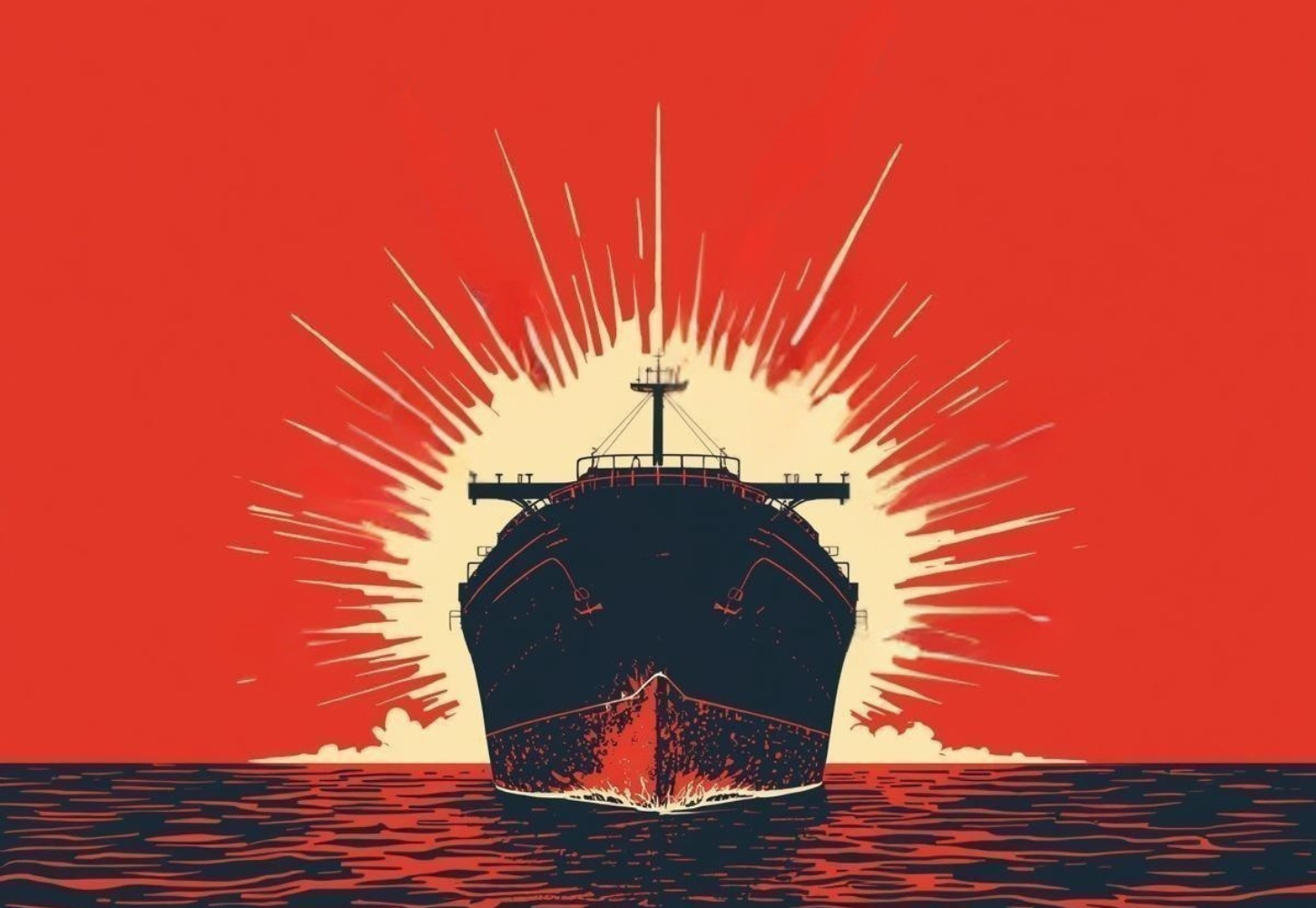
Beginning in November 2023, the Houthi movement in Yemen launched a sustained and deliberate campaign of attacks against commercial and military vessels transiting the Red Sea – one of the world’s most vital maritime chokepoints. Despite the Houthi frequently being dismissed as a localised or ideologically motivated insurgent effort, these attacks have become strategically important, as they disrupt global commerce and compel continuous American and allied naval operations. Moreover, the attacks have also transformed the Red Sea into an active arena of great power competition between the United States (US) and the People’s Republic of China (PRC), in which the Houthis play the role of a proxy force advancing Chinese interests at minimal cost and plausible deniability.
By January 2025, the scope of the American response underscored the intensity of the campaign. At the annual Surface Navy Association conference, the US Navy disclosed that it had expended nearly 400 munitions over the previous 15 months while defending shipping from Iran-backed Houthi attacks. This included approximately 120 Standard Missile (SM)-2s, 80 SM-6s, 160 five-inch naval gun rounds, and roughly 20 Evolved Sea Sparrow missiles and SM-3s. Such extraordinary expenditure of high-end and expensive ordnance highlights the asymmetric cost exchange imposed on the US in carrying out one of its core missions: protecting freedom of navigation.
While the US is using millions of dollars’ worth of weapons, it is the PRC that stands to benefit from this dynamic. The Houthi attacks function as a Chinese proxy strategy which degrades US naval readiness, evaluates American responses to sustained missile and drone threats, and undermines US credibility as the guarantor of maritime security. This is bolstered by the fact that the People’s Liberation Army Navy (PLAN) group was monitoring the action for a time.
The Red Sea and adjacent Suez Canal account for up to 12% of global trade, and remain indispensable arteries linking Europe and Asia. Persistent instability in this corridor directly challenges the foundations of American-led maritime order, as well as threatening the global economy.
The Houthis themselves are not a primitive insurgent force. Since 2011, they have seized control of much of northern Yemen, including Sanaa, the Yemeni capital. With extensive backing from Iran and Hezbollah, the Lebanese paramilitary group, the Houthis have developed increasingly sophisticated military capabilities, particularly in the maritime domain. Their arsenal includes long-range ballistic missiles, cruise missiles, armed drones, naval mines, and anti-ship systems such as the Toufan ballistic missile (with a range of roughly 1,900 kilometres [km]), Quds-2 cruise missiles (up to 2,000km) and Samad-series drones with comparable reach. These capabilities allow them to threaten international shipping far beyond Yemen’s immediate coastline.
While the Houthis publicly frame their campaign as retaliation against Israel and its supporters, and resistance to American-British military actions, the strategic effects extend well beyond these stated motives. Even as the tempo of attacks declined from their 2024 peak, the threat persists, forcing sustained naval deployments and continued expenditure of scarce defensive munitions.
The PRC’s interests are served directly by this outcome. It should be noted that Chinese trade was impacted by the attacks, but at a lower rate. In fact, the Houthis expressed the intent not to target Chinese or Russian vessels using their lower-tech weapons.
Beijing’s expanding economic and political ties with Iran – the Houthis’ principal sponsor – make support for the Iranian proxy network a low-risk means of advancing Chinese influence in the Middle East. At the same time, instability in the Red Sea complements broader Chinese efforts to expand its strategic footprint across the Gulf of Aden and the Horn of Africa, anchored by its military base in Djibouti and reinforced through port access, infrastructure investment and maritime diplomacy.
Iran provides the Houthis with weapons, training and intelligence, much of it enabled – directly or indirectly – by Chinese technology and supply chains. This assistance includes dual-use components, satellite imagery, navigation systems and drone technologies which enhance Houthi targeting and operational reach. The result is a layered proxy relationship in which the PRC benefits without engaging overtly.
From an attritional standpoint, the benefits to Beijing are also substantial. Repeated Houthi attacks compel the US Navy to intercept low-cost drones and missiles with some of its most expensive air defence systems. Over time, this erodes missile stockpiles, stresses maintenance cycles, accelerates platform wear and exhausts crews operating at a sustained high tempo.
Equally important are the intelligence dividends which the People’s Liberation Army (PLA) – the PRC’s armed forces – gain from watching American operations. By provoking US and allied defensive responses – often using unsophisticated drone systems – the Houthis generate a steady stream of data which can be used by the PLA to understand defensive systems. The radar emissions, Electronic Warfare (EW) techniques, Command and Control (C2) procedures, tactics and interceptor employment patterns all are observed, recorded and analysed by the PLAN.
This information is invaluable for refining future operational concepts and countermeasures in any future operations around Taiwan. Of course, on the other side of the coin, the US Navy is getting to practise operations in a real-world environment, which is also beneficial for future operations.
Finally, the Red Sea campaign carries powerful strategic messaging worldwide. Continued disruptions to commercial shipping risk eroding international confidence in the US’ ability to guarantee freedom of navigation, a cornerstone of American global power. Every successful or near-successful attack reinforces perceptions of US vulnerability and overstretch.
Seen in this light, the Red Sea crisis may represent more than a regional security problem. Historically, great power wars rarely begin with formal declarations. They often emerge through deniable proxy conflicts which allow states to test weapons, doctrines and political will. The Spanish Civil War of 1936-1939, for example, served a similar function in the lead-up to the Second World War, in addition to the geopolitical aspects of the civil war itself.
American and allied forces are already engaged in daily combat operations against state-enabled actors in the Red Sea, even if these engagements are publicly framed as part of a regional conflict, not a wider conflict. The lack of explicit acknowledgement does not diminish their significance; it merely obscures the possibility that these encounters are shaping the opening phase of a larger systemic struggle, or at least operations to weaken the US for future operations in another theatre of operation (i.e., the Indo-Pacific).
What should the US do?
First, this is not advocating for the abandonment of the Red Sea region or the US Navy’s traditional role in guarding sea lanes. Both or either of these would be a disaster to American national security, the security of its allies, and global stability. However, Washington needs to meet this challenge in a different approach. A suggestion is for the US to use a four-pronged approach to the Houthis in the Red Sea and other similar proxy attacks.
First, a tactical reassessment. The current model of deploying billion-dollar destroyers and expending million-dollar missiles to defeat low-cost drones is not sustainable either financially or industrially, especially in the current political and economic climate. The US should expand the use of uncrewed systems, directed-energy weapons and lower-cost countermeasures such as advanced jamming and point-defence solutions. Expeditionary platforms and adapted commercial vessels should supplement high-end warships.
Second, strategic messaging. Washington must seize the narrative initiative by explicitly linking the PRC, via Iran, to regional instability. Shadow sponsors should be named. At the same time, the US should strengthen multinational naval task forces to distribute the burden and demonstrate unity – particularly with its European, Indian, Australian and regional partners.
Third, reciprocal proxy pressure. Defensive operations alone are insufficient. The US should adopt its own sub-threshold strategies, supporting countervailing pressures against Houthi, Iranian or Chinese interests in other theatres. The US could expand intelligence and logistical support to regional partners opposing Iranian proxy networks, employ targeted cyber and financial measures to disrupt sanctions evasion and proxy funding, or conduct ‘lawfare’ by leveraging maritime insurance, regulations and port-access mechanisms to raise the costs of Houthi interference in the Red Sea.
Fourth, economic and strategic redundancy. No single chokepoint should be this critical, and free and open nations should examine other potential chokepoints, and build redundancy into their strategies. While protecting the Bab el-Mandeb and Hormuz straits remains essential, Washington should also support alternative trade corridors, such as the India-Middle East-Europe route, and expand its presence in East Africa and the Indian Ocean to counter Chinese port diplomacy in the region. Doing so would be a win-win for American policy.
Conclusion
Houthi attacks on shipping in the Red Sea have evolved from a regional insurgent threat into a strategic proxy conflict between the PLA and the US military with global economic and security implications. The Houthis, while publicly framing their attacks as resistance to Israeli and ‘Western’ intervention, have imposed disproportionate costs of weapons, supplies and manpower on the US Navy. The result is an asymmetric cost exchange, which degrades American readiness and strains naval resources for operations across the world.
The PRC has emerged as the principal beneficiary from the weakened US Navy. Through their partnership with Iran, the Houthis function as a proxy force which weakens American maritime dominance while providing the PRC with valuable intelligence on US naval tactics and systems. This deniable, low-cost strategy undermines American credibility as a security guarantor and signals a broader pattern of great power competition unfolding through proxy warfare rather than open conflict.
If the US fails to grasp the deeper stakes of the Houthi campaign, it risks being strategically outmanoeuvred by the so-called ‘CRINK’ nations – the PRC, Russia, Iran and North Korea – before a broader conflict emerges fully, in Taiwan or at least in the Indo-Pacific region. For the PRC, these attacks are not merely a Red Sea crisis; it is a rehearsal for future conflict.
The US must adapt to this new form of proxy irregular warfare. Its adversaries already have.
Edward Salo, PhD, is Professor of History and Chair of the History Department at Arkansas State University. He is a former Fellow of the Modern War Institute at West Point and the Joint Special Operations University, as well as a former Civilian Aide to the Secretary of the Army. He also served as a member of New America’s Nuclear Security Futures Group.
To stay up to date with The Broadside, please subscribe or pledge your support!
What do you think about this article? Why not leave a comment below?
A very interesting article. Thank-you for an excellent breakdown of the war in the Red Sea. My humble opinion is the Navy needs to increase the firepower of their warships! Just the rambling thoughts of an old sailor! (Hope I haven't upset anyone!)